
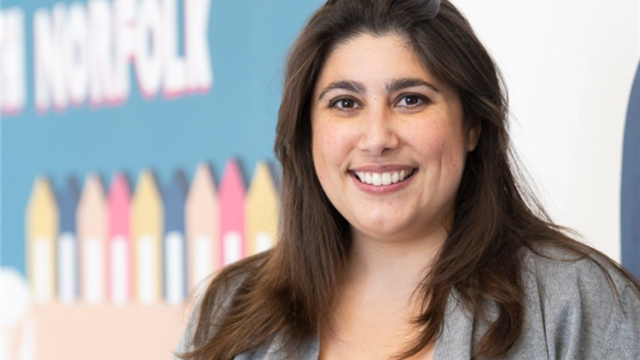
How did you get into insurtech?
I’ve worked in insurance my whole career, beginning in pricing, underwriting and finance with Aviva. While at Aviva, I had the privilege of starting up RAC Insurance as a new broker within the portfolio. It was an exciting time and I learned an enormous amount. RAC didn’t really have a motor insurance brand at the time, so we were filling a gap for that brand in the market and over the next five years it grew into a very big business which Aviva ultimately sold to the Carlyle private equity firm. I think that gave me the bug for starting a business. I met some of my founding team at Pikl along that journey and got a taste for entrepreneurship without having to raise any external capital. We’d had a lot of fun and, when RAC was sold, we decided to look at setting up our own company, but we need the right niche area in the market to build a product for.
It wasn’t until I was travelling a lot with my role at Co-op, I got tired of staying in hotels and a colleague suggested staying in Airbnbs, which were very new back then. When I spoke to homeowners, I realised they had an issue getting home insurance when they were doing Airbnb at the property, and that’s how I ended up starting Pikl and beginning my insurtech journey to solve that problem.
I’ve worked for a lot of big organisations, including Aviva, Gallagher, Sainsbury’s and Co-op, and they all had challenges with their technology. A lot of them were going through very big, multi-year legacy transformation programmes and I got quite frustrated that, although there were very good reasons why, we couldn’t move faster and adopt some of the features that I knew customers would want at a pace that was good.
And so, starting up an insurtech was the natural route for me. I knew I wanted to start a business and that I wanted to be in control of my destiny in as far as the technology journey that we could provide to customers, and to use some of the fantastic emerging technologies that have come into the market over the past 10-20 years.
We joined Insurtech UK very early on and I think I’m now the longest standing board member. We realised that in this new insurtech world, there were challenges that some of the insurtech businesses had that were different from just being an insurance broker, or being an insurance MGA or an insurance company.
For example, when you’re raising money. As a start-up business, you have access to tax benefits including EIS and these are very valuable to angel investors when you’re an early stage company. Insurance companies are excluded from that tax benefit but MGAs are not. We found there were a number of founders of MGAs that had applied to HMRC for this tax advanced assurance and had been rejected, and that was because the assessors didn’t really understand all the nuances of our industry. We decided to come together and lobby HMRC, and were successful in getting them to correct that. That initial success then helped us to consider how else we could come together to help support the insurtech sector in the UK.
What challenges have you had to overcome in being a female founder?
I think the vast majority of the challenges I've faced are quite generic, either to startups overall or specific to our industry. When I've talked to other founders in the insurtech market, you realise we are all facing the same challenges.
We have challenges that a lot of the loans and grants and tax breaks have the same problem: they exclude or misunderstand insurance. So aside from the work that we initially did with HMRC, there's been things like working with Innovate UK to open up competitions for insurtechs, because until two or three years back there had never been a competition that included our part of the markets.
As founders we all found that when we were trying to raise investment we had collectively fewer sources we could go to because of exclusions due to misunderstandings about what insurance is.
There have also been challenges with reaching product market fit, and that's true for any business that's starting up: you've got to get to a place where your product works and you can show that you've got enough traction from that product.
The problem with the insurance market – particularly the insurtech market – is that, similarly to the fintech market, particularly if you're working B2B and you're trying to sell your product into large insurance companies, that usually has a very long sales cycle. It can take years to get in, get a pilot stood up, try and understand whether it works and then to have a broader rollout with those companies.
That again makes the journey longer for insurtech founders than it is for other industries where you may not have to necessarily rely on doing business with those very big companies in the industry. It’s a problem that I think many founders have faced.
Certainly at Pikl, whilst we don't sell to insurance companies we do have a long sales cycle and have a dependency on insurers within the cycle. That's something you have to work through and understand what it means for you as a business. Insurtech UK again have been very proactive on that, working with the insurance market to try and cut through some of the red tape and help make pilots faster.
There is the fintech promise that was released a few years ago which a number of the large insurance companies signed up to which committed to being able to work with startups in a shorter timeline. And actually, if you fast forward to where we are now, I think that's borne fruit.
Venture capital firms that specialise in investing in the insurance market are saying that the sales cycle has improved dramatically over the last few years and that's no doubt due to the work that we've been doing across that market to try and help those businesses think about how they make those sales cycles shorter.
What's the biggest buzz for you about running your own company?
I love getting out of bed and solving customer problems. I like figuring out how to do things and working very closely as we do with big partners in the vacation rental market to understand how we help them make more money from their business model by taking bigger risks that can be offset within an insurance policy.
I love the technical challenge of working with those partners to solve those problems and being able to work as part of a close-knit team where we can come up with solutions, rapidly get those solutions to market and test them, then iterate them. That certainly is not something that I could have done in a big company, and I think would still be challenging in a big company today, even though many of them have updated their processes and tech to be able to fast test and learn.
You often don't have the luxury in a big company to devote a lot of time to working with clients, because they may only allocate a short period of time for you to learn new things, so I love being the master of my own destiny at Pikl.
What single decision has been most impactful in getting you to this point in your career?
The biggest decision has to be starting Pikl; I can't think of a bigger one than that.
The first instrumental step in that was probably when I moved on to the RAC team and actually, if I step back even further, it was probably when I decided to work on a finance path.
I'd previously held a number of different roles within Aviva, but decided to move over to the finance side of things, which was really interesting because it gave me a view of both sides of the table. I don’t think many people have held roles on both sides of pricing and accounting, and it was having both of those specialisms that was how I got the job in the first place, because it was a new business and a new team that needed someone with both pricing and finance experience.
So, choosing a finance path was probably the pivotal moment that led me into RAC and then RAC was the pivotal moment that led me into entrepreneurship, and then of course the biggest move was deciding to quit my day job and start up a new company developing products for the Airbnb market.
There was quite a lot of planning, so it was about a year in the making before I made the leap. I had been doing some consultancy work for a couple of years by this point so had already made the shift to not being full-time employed but had never struggled for work so I think it was a lot less scary to then decide to start my own business because if it didn’t work I knew I could always go back to contracting.
But all the same I had to spend a year saving up because I knew that there was going to be at least a year that I wouldn't be able to pay myself (it transpired it was 3 years!). But that was a deliberate choice because I wanted to boot strap the business. I wanted to get far enough before I took investment on in order to make sure that I had a good enough position to negotiate terms.
I remortgaged my house and my co-founders similarly put money in and worked for free for three years as well so it was a very big commitment as a team, and that’s probably why it took a year for us to very carefully think it through before we actually pushed the button on it.
What or who has helped you the most in your career?
I've been very privileged to have had lots of people – especially strong women – who have championed me, and many of them are now shareholders in Pikl.
Very early on, at RAC, I was championed and mentored by Diane Cougill who at the time was the chief finance officer of RAC (she's now chief finance officer at The Ardonagh Group). She helped bring me into finance and onto that RAC role.
At the same time, there was another woman – Angela Seymour-Jackson – who was the CEO of RAC at the time. She is another strong woman who was very inspirational to me early on who is now on my board.
These strong women leaders inspired me that it can be possible.
There have been other women too: Cathryn Riley, senior leader within Aviva, and Evelyn Bourke at Bupa also really backed me. I've been very privileged to have been sponsored by a lot of strong female leaders within the insurance market.
There are also lots of male leaders out there that specifically sponsor women. I'm very privileged to have Sir Peter Wood as my largest shareholder. Peter exclusively backs women in his investments and is a big champion of women entrepreneurs.
My chairperson Stuart Reid has been with me since the start of Pikl. I don't know where I'd be without him; he’s been on the entire journey with us – the highs and the lows. He’s fantastic and, again, works with a number of other female founders as well.
When you’re working in a big company, there are lots of people and teams you can go and talk to if you need help or advice with HR or compliance or something like that, but you don't have that when you start your own company. You've got to figure out what that support network looks like for you, and often it's people that you've worked with that are going to back you because they believe in in you and help you navigate everything you need to do at the start of your journey as a business. At the beginning it's a lot more about you than it is about the idea. Later on, it’s about the idea and whether that idea is making money, but in those early days you need those people that back you.
What moment stands out to you as a career highlight?
That’s a tough question, because we've had a lot of really good moments at Pikl.
We started out in 2019 as a B2C business solving the problem that people who were letting out their homes on Airbnb couldn't get home insurance. What we didn’t know then was that there was going to be a Covid pandemic, that the whole marketplace was going to change as a result, and that it would be massively impactful to our direction as a company.
It was during the pandemic that we realised that there was a big problem with cancellations in our market. Travellers needed flexibility because they didn't know if there was going to be a lockdown or not, and the professional property managers in the market were struggling financially to deliver that.
So we pivoted the business in 2022 to move towards a B2B product offering focused around cancellations and, in doing so, we believe we've actually created an entirely new category of insurance, because we haven't just tried to focus on the risk of a cancellation. Instead, we're focused on trying to generate more revenue for our partners because we see that cancellations can be an opportunity, not just a risk. Travellers like flexibility and they're prepared to pay more for it.
So the main part of our business now is our cancellation proposition where we drive revenue as well as manage downside risk, and probably the pivotal moment in that was in July 2024 when we secured a partnership with Sykes Cottages, who are the largest property manager in the UK. That really changed the course and direction of the business – providing validation of the new product that we were launching at the time – and has now set the tone for the next stage of growth for the Pikl business.
When it comes to women in insurtech, is there enough representation?
I think that insurtech is quite a welcoming place. If I look at some of the women who have supported me on my journey, they were the real trailblazers. Some of them were working in the 1980s and 1990s as women in senior roles, when it was a very different environment for women in business. They're tough, those women; they've had to fight their way to the top, and they've laid the foundation for my generation.
For my part, I feel I've had equal opportunities coming into the roles in the businesses that I've been in. I've had role models like those women to look up to and say: ‘It is possible. I can do it.’ There have also been a lot of people along the way that I’ve met that deliberately choose to invest in and back women, and I have been able to find my way to them. I think we're probably only just seeing women come through now with the downstream effects of both those elements. I know quite a few female founders, but I'd love to see more of them.
I think in insurance we probably have some our own specific challenges around getting funding into this very specialist market. There's a long sales cycle so that means there is less capital overall and that will proportionately impact women, but I think there is an open environment to try and help women.
We do still need to think about how we support women that have got families, as there's probably a natural thing where women at that stage may be less likely to want to take on risk and we need to think about how we help them to do that.
I also see a lot of women that come to the market later in life, once their families have flown the nest, so we need to think about how we support women through all the different life stages.
I think there's probably still more that can be done there, but I think we have got a welcoming environment and a lot has been done to make sure that there are equal opportunities.
What advice would you give to other female founders?
Build a support network around you. Talk to people about what you're building. I know very early on when I was doing this, I was very worried about someone copying or stealing my idea, but the reality is that's probably not going to happen. The insurance market is a very collaborative place. There are a lot of people that want to support people to get ideas off the ground.
If you've got to a place where your business is very successful and bringing in a lot of money, then you might start to get competition coming through, but in those early stages there are a lot of mentors and insurance brokerages that are prepared to partner. You don’t need to worry about trying to protect your position; what you need is help and people that are going to take a chance on you and help you work with that product to get it to a place where it does work. Don't be afraid of that. If you've got an idea, go for it. Fail fast, learn how you need to change it and get as much support from your network as you possibly can.
What advice would you give to young women just starting out in their careers?
It's such interesting times that we're living through at the moment, particularly with AI and everything that's going on in that space. I would say: ‘don't be afraid to dream big’. It's much easier to get an idea – particularly a tech idea – to market now than it was 10 years ago when I was looking at building a business. There are AI tools that will help you create a website or build out your first tech, and my hope is that we'll see more entrepreneurs giving things a go because the start-up cost of doing that is probably now a fraction of what it was.
So, I would say: ‘dream big’. The world has got so many possibilities. Try things out. Entrepreneurship is a really interesting way to live and build a career. But if you're straight out of school or university and you haven't worked in a business before, make sure you make connections with people that have and get those people that have got the scars of working in business for a long time to help you with your product development.